THE MARCH 1 Music Video Festival

Hollywood, CA – The AI International Music Video Festival proudly announced the selected videos of its
March 1 program at Promenade Playhouse in the heart of Hollywood.
March 1 SELECTED MUSIC VIDEOS WINNERS

“The Distance of Power ” - David Alasian - United Kingdom - 2025 - 3 min - World Premiere - JURY AWARDS: Best Storytelling - AUDIENCE CHOICE AWARDS: Best Music Video
What is it about military power?
The Distance of Power by David Alasian is a forceful and thoughtfully executed work that interrogates the machinery of war and the silence that enables it. The film articulates its thesis with confidence, examining how power operates at a distance, manufacturing conflict while remaining insulated from consequence. The recurring female figure functions effectively as a symbolic witness rather than a conventional character, embodying detachment, inheritance, and collective complicity. Musically, the score is strong and purposeful, reinforcing the emotional and ethical scale of the subject matter. The cinematography and metaphorical framing are disciplined and evocative, allowing the message to resonate without overt didacticism. The work succeeds not only in presenting a critique of power but in implicating the viewer within that silence, asking uncomfortable questions about acceptance, passivity, and responsibility.
Politically sharp, emotionally grounded, and unsettling in the right way.

“fEVER” - David Stout - United States - 2025 - 42 min - World Premiere - JURY AWARDS: Best Experimental
What does our US Mexican Border look like to an immortal?
fEVER by David Stout is an expansive, genre-defying work that unfolds as a mythopoetic journey through the US–Mexico borderlands, seen through the perspective of an immortal observer unconcerned with political boundaries. At over forty minutes, the piece operates more as a long-form audiovisual composition than a conventional music video, weaving together experimental film, operatic song cycles, and animated graphic novel aesthetics. The sound design is particularly strong, carrying emotional and narrative weight across episodes that feel both folkloric and postindustrial. The work demonstrates taste, class, and a confident artistic vision, engaging themes of migration, cultural continuity, social tension, and spiritual illumination with depth and seriousness. While its duration and format place it outside typical music video structures, it succeeds as an immersive and inspiring cinematic experience that invites introspection and sustained attention.
Bold, visionary, and expansive, it rewards patience rather than immediacy.
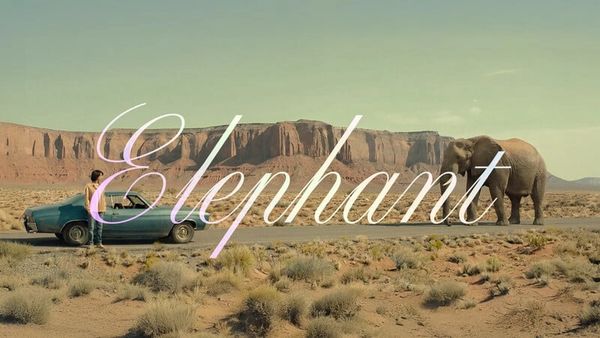
“Elephant” - Do young Jung - South Korea - 2026 - 4 min - World Premiere - JURY AWARDS: Best Script
What does an elephant have to do with memory and denial?
Elephant by Do Young Jung presents a gentle, introspective narrative about memory, denial, and reconciliation with one’s inner companion. The faded, slightly retro visual treatment gives the piece a dreamlike quality, reinforcing the sense of distance between past and present. Cinematography is carefully composed, allowing the elephant to exist less as spectacle and more as emotional presence. The video establishes its own contained world, one that feels coherent and quietly symbolic, while the contemporary K-pop track supports the emotional arc without overwhelming it. Overall, the work succeeds through atmosphere, restraint, and a clear emotional intention, offering a reflective and visually distinctive take on companionship and loss.

“Milivojka ” - Rok Kadoič - Slovenia - 2026 - 3 min - World Festival Premiere - JURY AWARDS: Best Historical Music Video
What was it like after the war in Slovania?
Milivojka by Rok Kadoič is unmistakably rooted in a Balkan, Slavic emotional landscape, drawing on folkloric sensibilities to tell a story of love, loss, and enduring memory. The cinematic structure, moving between a younger and older version of the protagonist, provides a clear and emotionally effective narrative arc, allowing the audience to feel the persistence of grief rather than merely observe it. The director successfully evokes a heart-wrenching dramatic tone, leaning into tradition and collective memory rather than novelty. While current AI tools occasionally lack the precision needed to fully carry the depth of the character’s sorrow, the overall execution remains strong and cohesive. The music plays a central role, with the singer integrating naturally into the narrative, reinforcing the emotional continuity of the piece. Though the approach is not radically new, it works as a reflective reimagining of familiar themes, where nostalgia and love-ache are treated not as clichés but as cultural inheritance. Sometimes looking back, especially with care and intention, is exactly the point.

“Freedom” - Mike Bennion - United States - 2025 - 5 min - Best Documentary Music Video
What was it like in 1930's Louisiana?
Freedom by Mike Bennion is a quietly powerful and accomplished music video that draws strength from classical visual storytelling. Set in a 1930s Louisiana village, the film offers a grounded yet poetic portrait of life shaped by hardship, ritual, and unspoken endurance. The imagery feels timeless and carefully composed, allowing the narrative to unfold with restraint and emotional weight. The integration of mysticism, spiritual symbolism, and handcrafted visual language adds depth without overpowering the story, reflecting how pain, faith, and meaning were historically intertwined in daily life. While the work embraces a familiar cinematic vocabulary, it does so with clarity and sincerity, resulting in a piece that feels both respectful and newly interpreted. Minor imperfections fade in significance against the film’s strong atmosphere and emotional coherence. Overall, this is a confident, human-centered work that understands the quiet power of storytelling through image, rhythm, and silence.
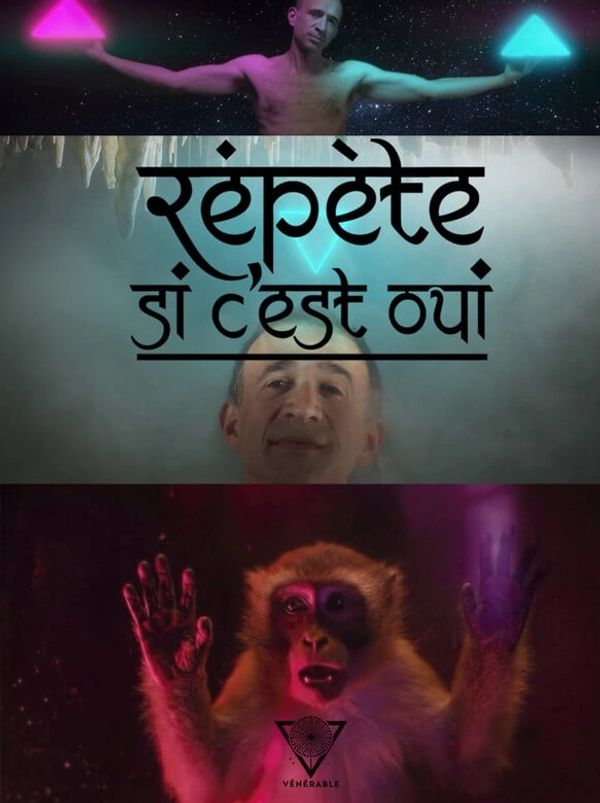
“Répète si c'est oui ” - Oliver Conrad - France - 2025 - 4 min - World Festival Premiere - JURY AWARDS: Best Human-AI Collab
What determines if you are ready for romance?
Répète si c'est oui by Oliver Conrad embraces an offbeat, deliberately awkward tone that oscillates between absurdity and quiet cool. The singer’s presence resists conventional charisma, his unusual physicality and restrained, slightly uncomfortable movements become a feature rather than a flaw, lending the video a strange, almost disarming authenticity. The electronic, laid-back soundscape is well balanced, with a rhythm that feels confident and controlled, supporting the visuals without dominating them. While the work may not immediately read as an obvious award contender, it carries a distinct personality and a sense of intentional oddness that sets it apart.

“NOTHING HAPPENED (feat. Graeme Cornies)” - Oranguerillatan AI - United Kingdom - 2025 - 4 min - World Festival Premiere - JURY AWARDS: Best Music Video
What is mental paralysis like?
NOTHING HAPPENED (feat. Graeme Cornies) by Oranguerillatan AI stands out for its conceptual clarity and unflinching representation of psychological stagnation. The work captures the texture of modern paralysis, routine, compliance, and emotional atrophy, with a striking honesty that feels self-aware rather than performative. Visually, the piece embraces intentional flatness and editorial framing, using layered color fields and symmetrical compositions that reinforce the sense of repetition and containment.
The inclusion of visceral imagery, such as blood and bodily distress, appears deliberate rather than gratuitous, serving to externalize internal decay and suppressed resistance. Musically, the progression from spoken, poetic delivery into a harder rock structure effectively mirrors the escalation from quiet resignation to embodied frustration and pain. While the two-dimensional visual language may feel restrictive in a cinematic context, it reads as a conscious stylistic choice aligned with the work’s themes. Overall, the piece is distinctive, controlled, and conceptually coherent, offering a different kind of engagement that prioritizes psychological truth over spectacle.